

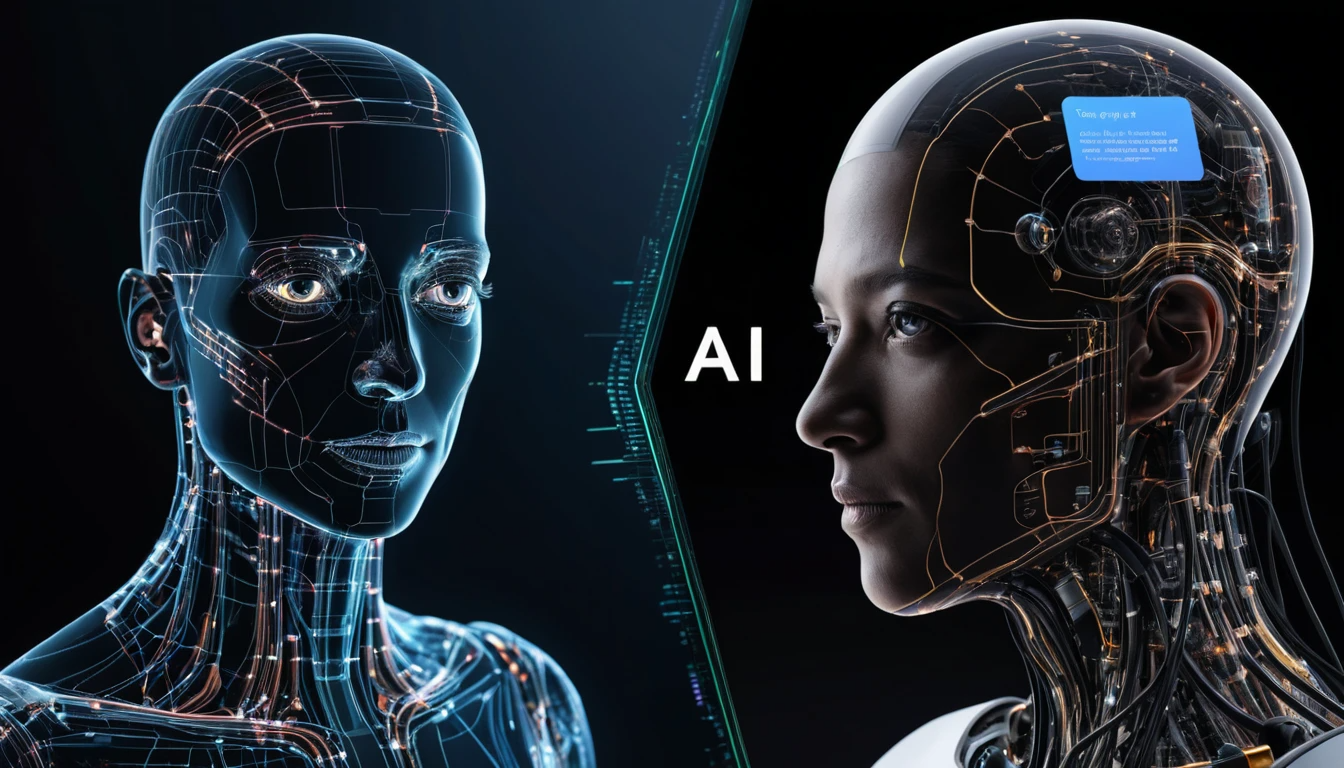
Tech Giants Battle for AI Dominance between Google and OpenAI explained. Learn strategies, tech shifts, and who leads the AI race today.
The battle for AI dominance between Google and OpenAI is reshaping technology, search, and business innovation. Both companies compete using advanced language models, massive data systems, and AI assistants. This rivalry is driving faster innovation, smarter tools, and a major shift in how people use the internet.
Tech Giants Battle for AI Dominance: Google vs OpenAI
Have you ever wondered who is really winning the AI war shaping your digital world?
The competition between Google and OpenAI is not just about technology. It is about control over the future of search, productivity, and human-computer interaction. Both companies are racing to build the smartest, fastest, and most useful artificial intelligence systems on the planet.
What Is The AI Dominance Battle? 🤖
The AI dominance battle refers to the race among tech giants to lead artificial intelligence innovation. Google and OpenAI are at the center of this competition. They are building systems that can think, write, code, and assist humans.
This battle is not just technical. It affects search engines, apps, and daily tools. Companies want their AI to become the default digital assistant for users worldwide.
Why Google And OpenAI Lead The Race 🚀
Google and OpenAI lead because they have strong data, talent, and computing power. Google has decades of search data. OpenAI has breakthrough language models like GPT.
Both companies invest heavily in machine learning research. They also attract top AI engineers from around the world. This gives them a strong advantage over smaller competitors.
Google AI Strategy Overview 🔍
Google focuses on integrating AI into search, ads, and cloud services. Its goal is to make search more conversational and intelligent. Tools like Gemini represent this shift.
Google also uses its massive data ecosystem. It connects YouTube, Maps, and Search to train better models. This creates a powerful AI feedback loop.
Key AI Comparison Overview 📊
| Feature | Google AI | OpenAI |
| Core Product | Gemini Models | GPT Models |
| Main Strength | Search + Data | Language Understanding |
| Ecosystem | Search, Ads, Cloud | ChatGPT, API Tools |
| User Base | Billions via Google | Millions via Apps |
This comparison shows how both companies use different strengths. Google dominates data access. OpenAI leads in conversational AI design.
OpenAI Strategy Overview 🧠
OpenAI focuses on building powerful general-purpose AI systems. Its main product is ChatGPT. It aims to make AI useful for writing, coding, and learning.
OpenAI also partners with major companies like Microsoft. This helps it scale faster. Its strategy is to bring AI directly to users through simple chat-based interfaces.
Key Technologies Powering The Race ⚙️
Both companies rely on advanced machine learning models. These include neural networks, transformer models, and deep learning systems.
They also use massive computing clusters. These systems process trillions of data points. This helps AI learn patterns and generate human-like responses.
Key technologies include:
- Natural Language Processing (NLP)
- Deep Learning Models
- Reinforcement Learning
- Cloud Computing Systems
Large Language Models Explained 💬
Large Language Models (LLMs) are the backbone of modern AI. They are trained on huge amounts of text data. This allows them to predict and generate language.
Models like GPT and Gemini can answer questions, write essays, and even code software. They are becoming digital assistants for everyday users.
Google Gemini Vs GPT Models ⚔️
Google Gemini and OpenAI GPT models compete directly. Both aim to understand and generate human language.
Gemini focuses on real-time information and search integration. GPT focuses on conversation depth and creativity.
Both systems are improving quickly. Each update makes them more powerful and accurate.
AI Infrastructure And Data Advantage 🏗️
AI systems need massive infrastructure to function. Google has one of the largest cloud networks in the world. OpenAI relies heavily on Microsoft Azure.
Data is another key advantage. Google has search queries, videos, and maps data. OpenAI uses licensed and publicly available datasets.
AI Infrastructure Comparison 🧩
| Area | OpenAI | |
| Cloud Power | Google Cloud | Microsoft Azure |
| Data Source | Search + YouTube | Licensed + Web Data |
| Scale | Extremely Large | Rapidly Expanding |
| Advantage | Data Depth | Model Innovation |
This infrastructure race determines AI speed and quality. Better systems lead to smarter AI responses.
Monetization Strategies 💰
Both companies aim to profit from AI in different ways. Google uses ads and enterprise tools. OpenAI uses subscriptions and API access.
AI is becoming a major revenue driver. Businesses now pay for automation, content creation, and analytics tools powered by AI.
AI In Search Engines Transformation 🌐
Search engines are changing rapidly due to AI. Google is shifting from keyword search to conversational answers. OpenAI is exploring AI-powered search experiences.
Users now expect direct answers instead of links. This changes how websites get traffic and visibility online.
Impact On Businesses And SEO 📈
AI is reshaping SEO strategies. Websites must now focus on helpful, structured content. Search engines prefer clear and direct answers.
Businesses are adapting by:
- Creating conversational content
- Using structured data
- Focusing on user intent
- Improving content depth
Risks And Ethical Concerns ⚠️
AI growth also brings challenges. These include misinformation, bias, and data privacy concerns.
Companies must ensure safe and responsible AI use. Governments are also creating regulations to control AI development.
AI Risks Overview 🧭
| Risk Area | Description |
| Misinformation | Incorrect AI answers |
| Bias | Unfair model outputs |
| Privacy | Data usage concerns |
| Job Impact | Automation effects |
These risks must be managed carefully. Responsible AI development is critical for the future.
Global Competition Beyond US 🌍
The AI race is not limited to Google and OpenAI. Companies in China, Europe, and India are also building strong AI systems.
This global competition pushes innovation forward. It also increases the speed of AI development worldwide.
Future Of AI Assistants 🔮
AI assistants will become more personal and proactive. They will manage schedules, write emails, and automate tasks.
Future AI will likely understand emotions and context better. This will make interactions more human-like.
Who Is Winning Right Now? 🏁
There is no clear winner in the AI race. Google leads in data and infrastructure. OpenAI leads in user-friendly AI experiences.
The competition is still evolving. Both companies continue to innovate rapidly.
What This Means For Users 👥
Users benefit the most from this competition. AI tools are becoming smarter, faster, and more accessible.
Every update improves productivity and learning. The future of digital interaction is becoming more conversational and efficient.
Conclusion
The battle between Google and OpenAI is shaping the future of technology. Both companies are pushing AI to new limits. Google focuses on data and integration, while OpenAI focuses on conversational intelligence.
This competition drives innovation across industries. Users, businesses, and developers all benefit from better AI tools. The AI race is far from over, and its impact will continue to grow.
FAQs
What is Google AI vs OpenAI race?
The race is about building the most advanced artificial intelligence systems. Google focuses on search integration while OpenAI focuses on conversational AI.
How does AI affect search engines?
AI changes search by providing direct answers instead of links. It makes search more interactive and conversational.
Who has better AI, Google or OpenAI?
Both are strong in different areas. Google excels in data, while OpenAI excels in language generation.
What are AI language models used for?
They are used for writing, coding, answering questions, and automating tasks. They help users work faster and smarter.
Will AI replace human jobs?
AI may automate some tasks but also create new job opportunities. It will change how people work rather than fully replace jobs.





Leave a Reply